Balancing a busy life with houseplants can feel like a hassle, but some plants actually get by just fine when you forget to water or don’t fuss over them every day. Understanding why these plants are tough helps you care for them smarter, not harder.
Why These Plants Work Well for Busy People
Plants like snake plants and ZZ plants have natural features that let them survive drought and low light. Thick leaves or stems store water inside, and they slow down their growth when light is weak. That means they don’t mind if you skip watering now and then. Overwatering is often the bigger risk.
For example, I once watered my snake plant weekly without checking the soil. The roots rotted because the soil stayed too wet. When I switched to feeling the soil about an inch deep and only watered when it was dry, the plant recovered fast. This simple change saved a plant that looked doomed.
Match Your Plant to Your Light Conditions
Not all low-maintenance plants thrive under the same light. It’s important to know what your space offers:
- Snake Plant and ZZ Plant: Handle low light well since they use energy slowly.
- Pothos and Philodendrons: Like moderate indirect light for fuller leaves.
- Aloe Vera and Jade Plant: Need bright light to keep their succulent water storage healthy.
Too little light slows growth; too much can dry out or scorch leaves, even on tough plants.
Water by Soil Dryness, Not Timers
Forget “water every week” rules, they’re too general. Instead, check if the top inch of soil is dry before watering. Roots need oxygen as much as water; soggy soil suffocates roots and causes rot.
- Aloe vera wants its soil very dry before watering again because excess moisture invites fungal problems.
- Spider plants like steady but not soggy moisture since they don’t store much water internally.
Size and Placement Affect Care Needs
Big plants need more water; small pots dry out faster but require less total care. Place your plant where you see it daily so you catch early signs of stress, like drooping or yellowing leaves, before things get serious.
I keep my pothos near my laptop; noticing slight yellowing there helped me adjust watering just in time to save some leaves.
Top 10 Low-Maintenance Indoor Plants for Busy People
Snake Plant (Sansevieria)
Stores water in thick leaves, closes pores at night to reduce moisture loss, hates soggy soil.Pothos (Epipremnum aureum)
Broad leaves work well in low to moderate light; trailing vines are flexible for placement.ZZ Plant (Zamioculcas zamiifolia)
Rhizomes hold water underground; thrives in shady spots where most would struggle.Spider Plant (Chlorophytum comosum)
Fast grower with fibrous roots; likes consistent moisture but recovers quickly if soil dries out.Peace Lily (Spathiphyllum)
Leaves droop visibly when thirsty, a handy natural reminder to water soon.Aloe Vera
Succulent thick leaves store water; needs bright light and very dry soil between watering.Jade Plant (Crassula ovata)
Plump leaves hold water well; prefers bright spots but tolerates some shade.Cast Iron Plant (Aspidistra elatior)
Tough leathery leaves resist damage and temperature swings better than most tropicals.Rubber Plant (Ficus elastica)
Glossy large leaves reduce water loss; wiping dust off helps it breathe better indoors.Philodendron
Adjusts leaf pores based on humidity and light, managing water use efficiently as conditions change.
How These Plants Handle Missed Waterings
When you forget watering:
- Leaves may curl or yellow slightly as they pull from stored reserves.
- Metabolism slows down to conserve resources.
- Internal water stores keep them alive longer than many other plants tolerate.
But repeatedly letting them dry beyond their limits will cause damage, especially if followed by overwatering that leads to root rot.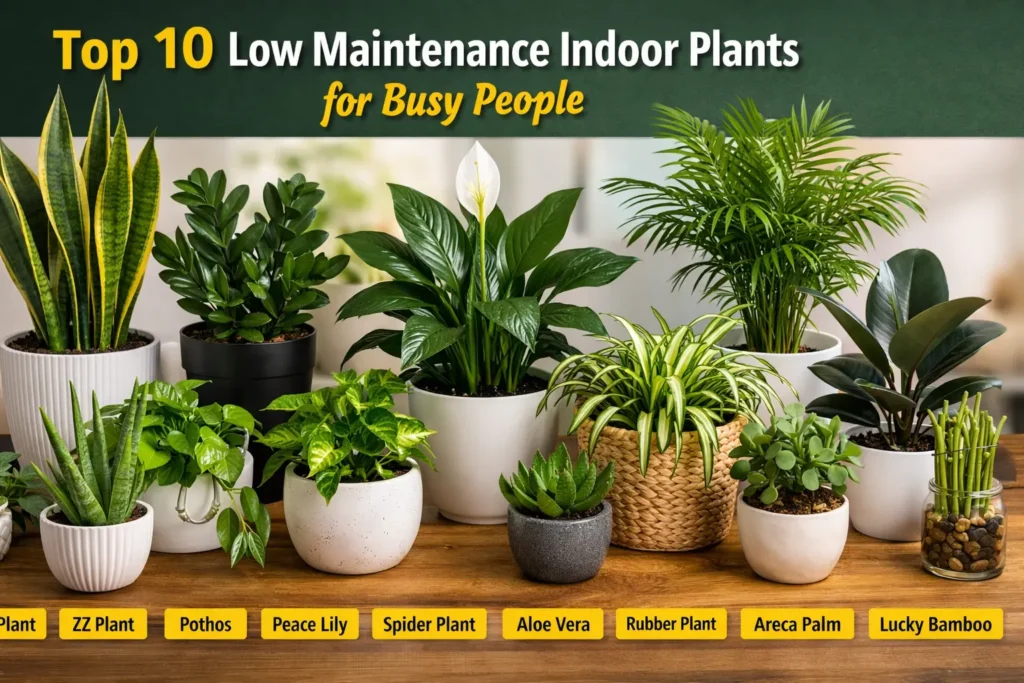
Pet Safety Tips
Some popular choices like pothos and peace lilies have mild toxicity if eaten by pets but usually only cause issues with large amounts ingested. Keep these out of reach if pets are curious climbers or chewers.
If you want safer options for pets, consider cast iron or rubber plants, they’re less risky while still looking great indoors.
Practical Care Tips for Busy People
- Use pots with drainage holes plus good potting mix to avoid soggy roots.
- Rotate your plant monthly so all sides get equal light.
- Clean dusty leaves gently with a damp cloth every few weeks.
- Set reminders loosely every 1–2 weeks but always check soil dryness first.
- If growth stalls without stress signs, try moving the plant to brighter indirect light temporarily before adjusting watering again.
Quick Start: Top 3 Easiest Plants & Basic Care
- Snake Plant: Low light OK, water only when top inch of soil is dry.
- ZZ Plant: Thrives in shade, let soil dry completely between waterings.
- Pothos: Moderate indirect light preferred, allow slight drying before watering again.
Start with one that fits your room’s lighting and place it somewhere visible so you notice subtle changes early on.
Taking care of indoor plants doesn’t have to be complicated or time-consuming once you understand how they survive neglect naturally. Checking soil dryness instead of following strict schedules lets you work with your plant’s rhythm instead of against it, turning indoor gardening into an easy part of your busy life instead of another chore waiting to happen.
