Indoor plants often get caught in well-meaning but rigid care routines that ignore how their needs change with the seasons. Watering every week, feeding monthly, or leaving plants in the same spot all year rarely works well. Indoor light, temperature, and humidity all shift through the year, and your plant’s health depends on adjusting to those changes.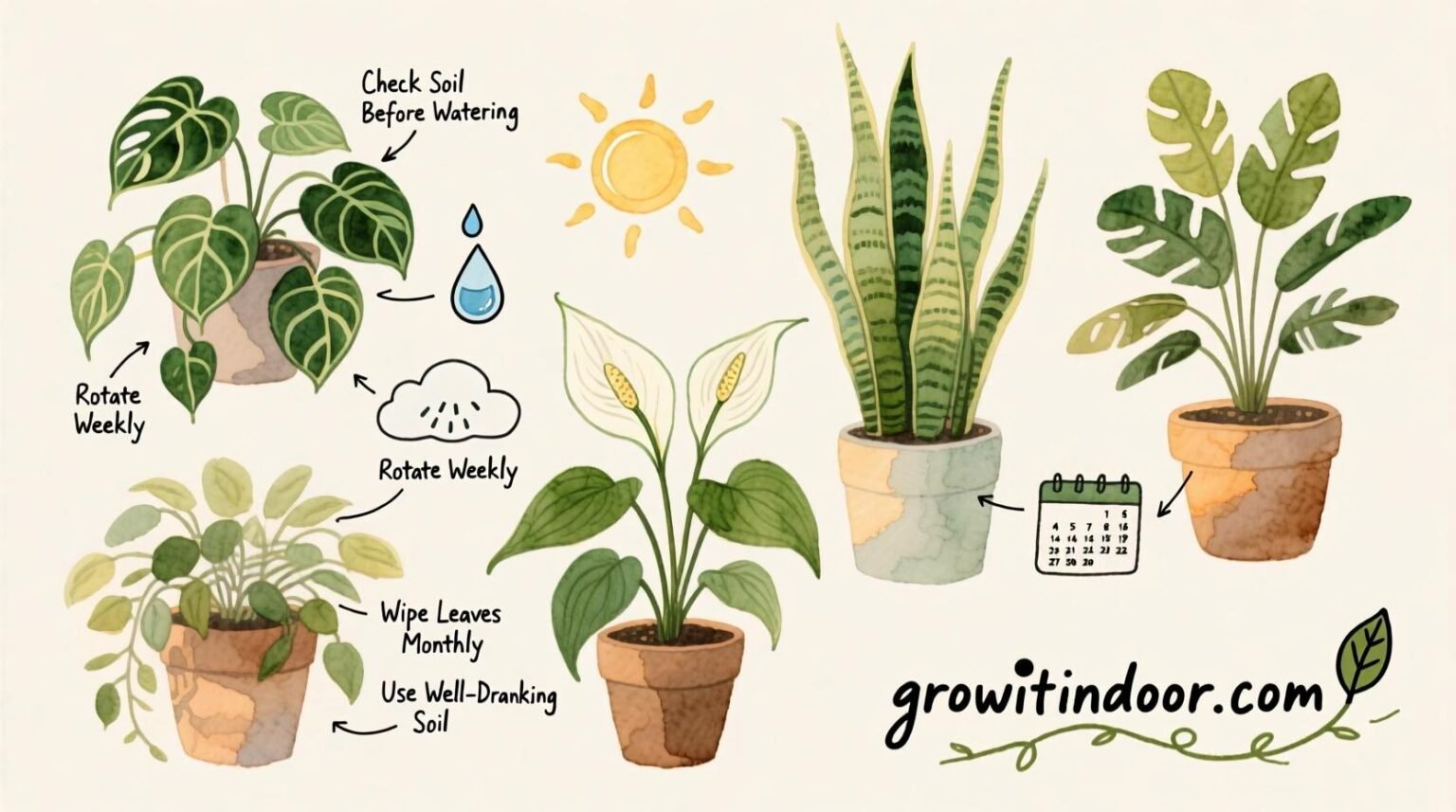
Why sticking to fixed watering schedules harms plants in fall and winter
Watering by the calendar, say every 5 to 7 days, assumes your plant drinks the same amount year-round. That’s rarely true. During spring and summer, plants grow actively and use more water. Checking soil moisture by feel or with a meter and watering when the top inch dries fits this seasonal rhythm.
When days get shorter and temperatures drop indoors, many plants slow down or enter a rest period. Their roots absorb much less water. If you keep watering as often as before, soil stays wet too long. That sogginess invites root rot and other problems.
Try this: Instead of a schedule, stick your finger into the soil or use a moisture meter before watering in fall and winter. If the soil feels damp below the surface several days after watering, wait longer next time. It’s normal for intervals to stretch to 10–14 days or more during cold months.
Composite example: A snake plant owner kept losing plants every winter despite weekly watering. Testing showed soil stayed saturated nearly two weeks after watering because the room was cooler and air barely moved near a closed window. Cutting back watering frequency helped immediately.
Light drops indoors through fall and winter; plants notice
Even if your plants don’t move outside, indoor sunlight dims considerably in colder months. Shorter days mean less light reaching your windowsill.
High-light lovers like succulents or fiddle leaf figs respond visibly: stems stretch out weakly, leaves turn pale. Even low-light tolerant species slow growth without obvious signs.
Keep an eye on your plant’s leaves and stems for dull color or leggy growth in fall and winter. You can also track daylight hours near where you keep them to see how much natural light they receive.
If light seems low:
- Try moving plants closer to brighter windows (even shifting just a few feet can make a difference).
- Consider adding LED grow lights on timers set for about 6–8 hours daily during darker months.
Dry indoor air in heating season stresses tropical plants
When heaters run in cooler months, indoor air often becomes very dry. Tropical favorites like monstera or peace lilies may develop dry edges or curled leaves, not because they’re thirsty, but due to low humidity stress.
Dry air makes these plants lose moisture faster through their leaves, which can trick us into watering more than they actually need underground. Overwatering combined with dry air can damage roots over time.
A better approach is to measure relative humidity if you can (many affordable meters exist). When it dips below around 40 percent:
- Place pebble trays filled with water under pots.
- Use a small humidifier nearby.
- Group tropicals together so they raise humidity naturally.
Misting alone usually isn’t enough for lasting relief.
Fertilizing less when growth slows protects roots
Feeding your houseplants constantly assumes they're always growing fast enough to use nutrients fully. In fall and winter when most slow down or rest, fertilizer doesn’t help much, and can cause harmful salt buildup in soil.
If your plant looks healthy but isn’t growing quickly, reduce feeding frequency sharply or stop it altogether until spring growth kicks back in.
If you do see signs of deficiency (rare during dormancy), cut back rather than maintain usual doses.
Real-life lesson from Jane’s fiddle leaf fig (composite example)
Jane followed a strict routine: weekly watering plus monthly feeding all year long. Yet her fiddle leaf fig dropped leaves every winter.
After checking soil moisture she realized she watered far too often during colder months when her plant slowed down. She stopped fertilizing after October, moved her fig closer to an east-facing window for better morning light, and ran a small humidifier on chilly nights.
That winter passed without leaf loss; new growth appeared vibrant; root rot vanished from her worries.
Jane’s story shows how ignoring seasonal changes inside your home causes preventable stress, even when care feels consistent.
When your home’s conditions make seasonal care tricky
Not every home has clear seasonal shifts indoors, or uniform conditions from room to room.
Some places run heating year-round; others have rooms that differ wildly in light or airflow:
- Use tools like moisture meters instead of guessing.
- Think about each plant’s unique microclimate.
- Try moving sensitive species around based on season, for example away from heat vents during winter or out of hot direct sun in summer.
- Keep notes about what you try each season so you learn what works best for your space over time.
Seasonal checklist tuned to your plant’s cues
Spring: Water when top inch dries; fertilize monthly; increase light exposure as days lengthen; boost humidity if possible
Summer: Maintain watering frequency; continue monthly feeding; watch for pests; protect from harsh midday sun
Fall: Cut watering by 25–30% based on soil moisture checks; stop feeding by mid-to-late fall; move plants closer to windows; raise humidity indoors
Winter: Water sparingly guided by moisture readings (10–14 day intervals common); pause fertilizer completely; add grow lights if needed; increase humidity with trays or humidifiers; avoid placing pots near drying heat vents
What to try right now if a plant struggles seasonally
Pick one houseplant that seems unhappy this season, maybe dropping leaves in winter or getting leggy come fall.
Before watering today:
- Check its soil moisture by touch or meter.
- Move it closer to natural light if you can.
- Add a humidity tray nearby if it’s tropical.
- Write down what you observe over two weeks: note changes in leaf color, firmness, droopiness, new growth, or any warning signs.
If after two weeks there’s no improvement:
- Try adjusting one factor at a time: reduce watering more if soil stays wet too long,
- Move it even closer to brighter windows,
- Or increase humidity further using a humidifier,
until you find what helps best for your unique environment.
It’s totally normal for indoor plants to need different care through the year, and learning those rhythms is part of becoming a confident plant parent who responds thoughtfully rather than follows fixed rules blindly. Your plant will thank you for noticing its changing needs instead of assuming they stay the same all year long.
